


Restructuring: realigning businesses
Companies restructure for a variety of reasons. Markets evolve, business models need to adapt, growth calls for new organisational structures, or a company finds itself in crisis. The objectives are often the same: reduce costs, increase revenue, improve liquidity and safeguard competitiveness.
The success of a restructuring depends on whether all stakeholders are committed to the process, including employees, banks and investors. They need to be involved at an early stage and have confidence in the management team. An external partner with a proven track record in comparable situations brings valuable experience and an independent perspective.
VALTUS Management Factory supports companies throughout restructuring processes, providing financial advisory services and interim managers who take operational responsibility for implementation. This applies to financially sound companies as well as those facing a crisis. Our services include developing viable restructuring concepts and, where necessary, appointing an experienced Chief Restructuring Officer (CRO).
How can we support you?
Our restructuring experts bring many years of leadership experience and support you in overcoming crises, sustainably optimising structures and putting your business back on the path to success.
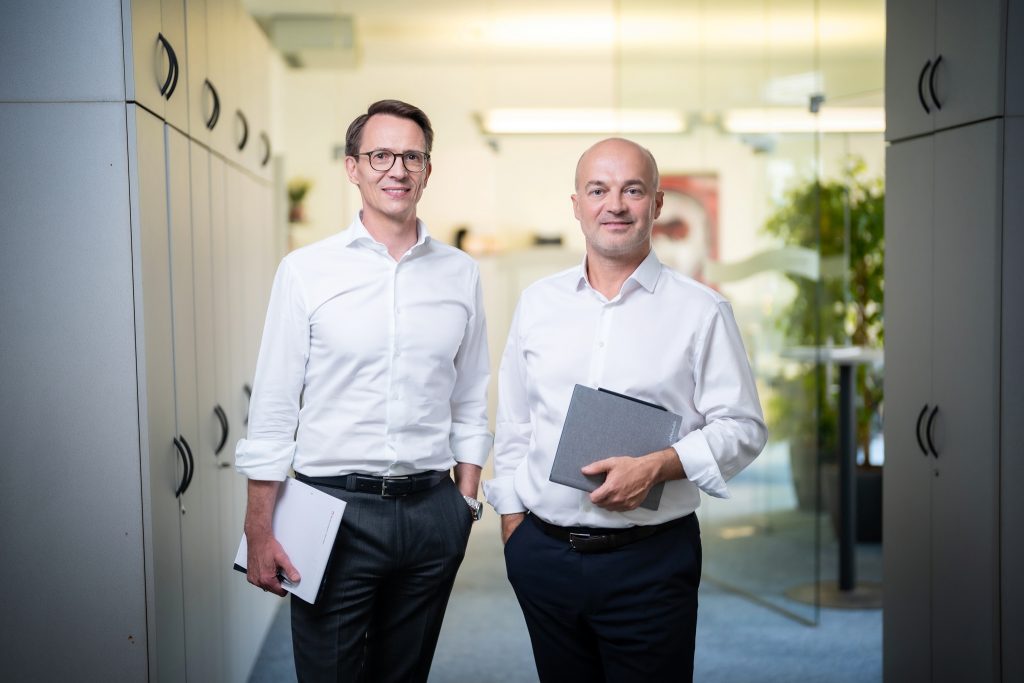

Savings and optimisation potential are quickly identified. The challenge lies in consistent implementation.
What does restructuring mean?
Restructuring refers to a fundamental business reorganisation of an economic entity that goes beyond optimising its organisational structure and operational processes. Its objective is to sustainably improve earnings performance, the debt and equity structure, liquidity and competitiveness. Restructuring may also involve changes to the corporate structure and is sometimes accompanied by M&A transactions. Unlike a turnaround, restructuring does not necessarily have to be driven by a crisis.
VALTUS Management Factory offers a comprehensive range of restructuring services across the DACH region (Austria, Germany and Switzerland), supporting your company throughout the entire process – from reviewing your business plan and developing restructuring concepts to implementing a restructuring programme with the support of an Interim Manager.
How does restructuring differ from a turnaround?
A turnaround refers to the averting of a crisis threatening the company’s survival, but does not necessarily involve a fundamental restructuring of an economic entity. Serious financial and operational problems must be addressed in order to restore profitability and a positive cash flow. This often requires a realignment of company processes and the organisation in order to increase efficiency and effectiveness. Staff reductions, an adjustment of the business model, cost cutting and changes in corporate management are often part of a turnaround. The aim is to create a leaner and more efficient organisation in order to return to profitability. Turnarounds require rapid and decisive action.
When is restructuring necessary?
Restructuring becomes necessary when financial performance or liquidity problems can no longer be resolved through individual measures within day-to-day operations. Typical triggers include unprofitable business models, several consecutive years of losses, persistently negative operating cash flow, the loss of a major customer, breaches of financial covenants or structural changes in sales markets. The pressure to act often also comes from external stakeholders, for example when banks require a restructuring plan, a going-concern forecast or an IDW S6 expert opinion as part of a loan extension.
Timing is critical: the earlier a restructuring process is initiated, the greater the scope for action and the less reliance there is on purely financial emergency measures. Once a company reaches an advanced liquidity crisis, the available options may be reduced to a matter of just a few weeks. Early liquidity planning and management helps identify financial bottlenecks early enough and implement appropriate measures.
The restructuring process in four phases
- Situation Assessment and Analysis: Establishing transparency around financial performance, liquidity, markets and competitors, as well as identifying the root causes of the need for restructuring. In crisis-driven restructuring situations, a rolling 13-week cash flow forecast is often required, and in some cases a going-concern forecast is also necessary.
- Restructuring Plan: Developing a coherent and integrated solution that may also encompass corporate law aspects, such as transactions, the closure of business units, demergers or mergers. Defining specific workstreams covering costs, revenues, working capital and portfolio management. Quantifying the proposed measures, assigning clear responsibilities and incorporating the entire restructuring plan into an integrated financial model.
- Implementation: The critical phase of any restructuring. This involves rigorous monitoring of measures, stakeholder management involving banks, shareholders and employees, and operational leadership by experienced executives (CEO, CFO or Chief Restructuring Officer).
- Stabilisation: Securing the results achieved, returning to regular management and control processes, and handing over responsibility to the existing management team. Alternatively, identifying and recruiting new executives to take over the company’s leadership following the restructuring.
Financial crises pose an immediate threat to a company’s survival
While strategic and operational crises are generally not an immediate threat to a company’s survival, liquidity crises often require decisive and immediate action to prevent insolvency. It is also essential to keep in mind the potential liability risks faced by directors and officers.
Companies can slide into crisis for a variety of reasons: the loss of key sales markets, aggressive competitors, innovations that transform products or markets, or simply poor management.
In times of crisis, the focus is often on identifying new business areas or expanding the product portfolio. However, such expansions frequently extend beyond the company’s core competencies and fail to deliver the expected financial results. A strategic crisis is often followed by an operational crisis, which in turn can lead to a financial crisis.
Financial crises often present unfamiliar challenges for existing management teams. In such situations, it is essential to maintain a clear focus on the company’s liquidity position and manage the business based on available cash rather than maintaining the usual focus on revenue and profitability. Cash and working capital management, as well as continuous monitoring, should become key priorities at executive management level. To achieve this, it is often advisable to establish a dedicated “Cash Office”, bringing together representatives from different business functions to set priorities effectively and ensure appropriate financial management.
When insolvency becomes a real possibility, management is confronted with various personal liability risks that must be carefully managed. Despite the time-critical nature of the tasks involved, it is essential not to neglect the proper reasoning and documentation of decisions or the involvement of relevant stakeholders. A robust, well-documented liquidity plan and a credible going-concern forecast are essential tools in this process.
VALTUS Management Factory has the experience and expertise required to help you successfully navigate these challenges. We would be pleased to support you as a trusted advisory partner or provide an experienced restructuring expert as an Interim Manager.
Network of restructuring experts and restructuring managers at Valtus Alliance
As the European leader in Executive Interim Management, Valtus Alliance has an extensive network of restructuring experts and restructuring managers.
Special features of restructuring in the countries of the Valtus Alliance
RESTRUCTURING IN AUSTRIA: an interview with Christian Kniescheck
RESTRUCTURING IN BELGIUM: an interview with Wim De Mulder
RESTRUCTURING IN BRAZIL: an interview with Marcia Cubas
RESTRUCTURING IN CANADA: an interview with Benoît Créneau
RESTRUCTURING IN CENTRAL AND EASTERN EUROPE: an interview with Bohuslav Lipovsky
RESTRUCTURING IN CHINA: an interview with Paul Mol
RESTRUCTURING IN DENMARK: an interview with Olav Hansen
RESTRUCTURING IN FRANCE: an interview with Christophe Mare
RESTRUCTURING IN GERMANY: an interview with Andreas Greis
RESTRUCTURING IN INDIA: an interview with Sanjay Lakhotia
RESTRUCTURING IN ITALY: an interview with Maurizio Ria
RESTRUCTURING IN SOUTH KOREA: an interview with KJ Lee
RESTRUCTURING IN SPAIN: an interview with Juan Manuel Gil de Escobar
RESTRUCTURING IN SWEDEN: an interview with Curt Holmertz
RESTRUCTURING IN SWITZERLAND: an interview with Roland Kleeb
RESTRUCTURING IN TÜRKIYE: an interview with Kıvanç Ersöz
RESTRUCTURING IN JAPAN: an interview with Hajime Baba
RESTRUCTURING IN THE NETHERLANDS: an interview with Ronald de Zoete
RESTRUCTURING IN NORWAY: an interview with Rolf Henrik Svendsen
RESTRUCTURING IN THE UNITED KINGDOM: an interview with Milly Camley
RESTRUCTURING IN THE UNITED STATES: an interview with Joe Poling
ReTurn membership
VALTUS Management Factory is a member of ReTurn, the independent Austrian expert forum for restructuring, reorganisation and turnarounds. For its part, ReTurn is the Austrian chapter of the international Turnaround Management Association TMA.
Frequently asked questions about restructuring
When should a company initiate a restructuring?
The earlier, the better – the sooner a company acts, the more options it has. Common triggers include market changes, declining margins, rapid growth, an acquisition or a deterioration in the company’s financial position.
In Austria, the Business Reorganisation Act (Unternehmensreorganisationsgesetz – URG) specifies two financial indicators that give rise to a presumption of a need for reorganisation: an equity ratio below 8% and a notional debt repayment period exceeding 15 years. Companies should take corrective action well before reaching these thresholds.
Restructuring does not necessarily have to be crisis-driven. Successful companies also restructure regularly to strengthen their position and prepare for the future.
How long does a restructuring take?
The planning phase typically takes six to twelve weeks. Implementation can take between twelve and 24 months, depending on the extent of the changes required. In a crisis situation, immediate measures to secure liquidity are initiated alongside the planning phase.
When is interim management beneficial in a restructuring?
Interim management is particularly valuable when a company lacks the restructuring expertise required, when the existing management team is fully occupied with day-to-day operations and crisis management, or when banks and investors expect an experienced, independent leader to take charge.
Typical situations include developing and implementing a restructuring plan, acute liquidity shortages, the departure or unavailability of a CEO or CFO during a critical phase, and negotiations with lenders and creditors.
Interim managers can be deployed at short notice, bring experience from comparable situations and operate independently of internal interests. Depending on the circumstances, they complement the existing management team – for example, as Chief Restructuring Officer (CRO) or Interim CFO – or take over individual senior management positions.
What does a Chief Restructuring Officer (CRO) do?
The CRO serves as an interim member of the executive management team and takes overall responsibility for the restructuring process. They oversee the restructuring programme and liquidity planning, while also leading negotiations with banks, investors, creditors and employee representatives.
This allows the rest of the management team to focus on day-to-day business operations. The role is typically filled by an Executive Interim Manager with extensive restructuring experience.
What is the difference between restructuring and insolvency?
Restructuring is a business decision and is also undertaken by financially sound companies. Insolvency, by contrast, is a formal court-supervised proceeding initiated in cases of inability to pay debts as they fall due or overindebtedness.
In times of crisis, restructuring is generally pursued out of court through agreements with banks, creditors and shareholders. If an out-of-court solution cannot be reached, the following formal proceedings are available in Austria:
- Restructuring proceedings under the Austrian Restructuring Act (ReO):
Available where insolvency is likely, without opening formal insolvency proceedings. The company generally remains in self-administration. - Reorganisation proceedings (Sanierungsverfahren) with self-administration: Insolvency proceedings under the Austrian Insolvency Act (IO), requiring a minimum recovery rate for creditors of 30% within two years. Management continues to run the company under the supervision of a restructuring administrator.
- Reorganisation proceedings (Sanierungsverfahren) without self-administration: Insolvency proceedings under the Austrian Insolvency Act (IO), requiring a minimum recovery rate for creditors of 20% within two years. The administration of the company is transferred to an insolvency administrator.
In Germany, the main options include restructuring plans under the German Corporate Stabilisation and Restructuring Act (StaRUG) and insolvency plan proceedings, including proceedings under self-administration.
Does VALTUS Management Factory support restructuring projects in Austria and across the DACH region?
Yes. VALTUS Management Factory supports restructuring projects in Austria, Germany and Switzerland. It has a dedicated Financial Advisory team and works closely with Valtus Germany and FS Partners – A Valtus Company.
Further Articles and Insights on Restructuring
Insolvency and Restructuring Proceedings
Independent Business Review (IBR), Going Concern Prognosis and IDW S6 Restructuring Opinion
Transaction advisory and M&A process support
Turnaround Management
Chief Restructuring Officer (CRO)
Here are some of our references with regard to restructuring. Just click on the article in order to open and read it!




How can we help?
A sudden vacancy? A lack of leadership? A need for a turnaround? Or a drive to achieve growth and results?
Our Interim Managers have at least 15 years of leadership experience and specialise in overcoming challenges similar to yours. They step in and start delivering results from day one, bringing strong leadership and drive – exactly when you need it.
For more than 25 years, we have been helping companies in Austria and across the DACH region identify and engage the best Executive Interim Managers and experts available.
Let us know how we can help!